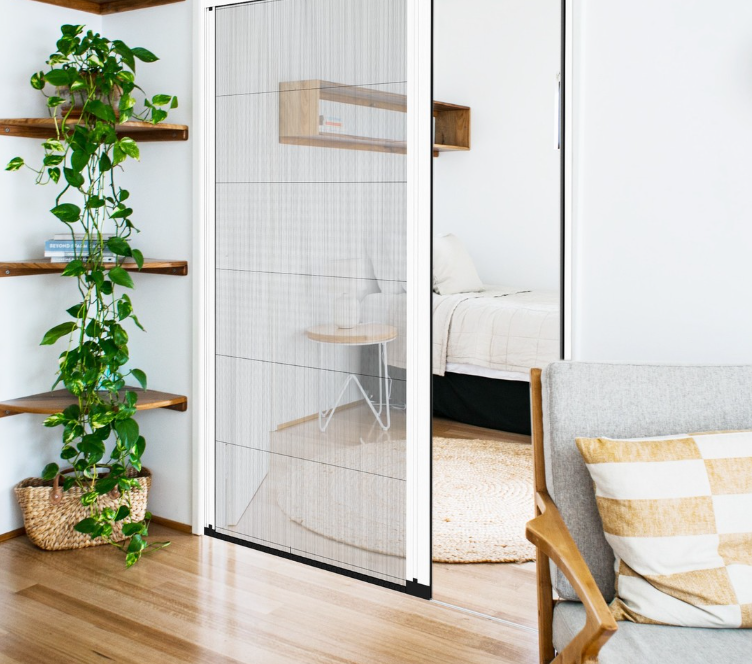

An anti-smog screen window or door combines a window or door system with mesh marketed for dust or pollen control. Actual particle reduction depends on the specified mesh, edge seals, installation, airflow, and test conditions. It is not an air purifier, and a PM2.5 or smoke-reduction claim needs a report on the exact mesh and test method first.
- Home and light commercial buyers: Name the concern (insects, pollen, dust, or smoke), then choose a fixed screen, retractable screen, pleated door, or ventilation door. For severe smoke, close the opening and use appropriate indoor filtration; a screen is not a substitute.
- Dealers / contractors / OEM: Treat it as mesh technology class + carrier system + seal + service. RFQs need opening sizes, operation type, mesh construction docs, cleaning path, and only the performance claims the factory will put in writing.
“Anti-smog screen” covers different mesh technologies and complete window or door systems. Confirm the mesh class and the opening it will fit before comparing quotes.
Start with the application and carrier system; then request the mesh construction, fit details, maintenance instructions, and evidence for any performance claim.
Market language map: anti-smog is not the only name for the job
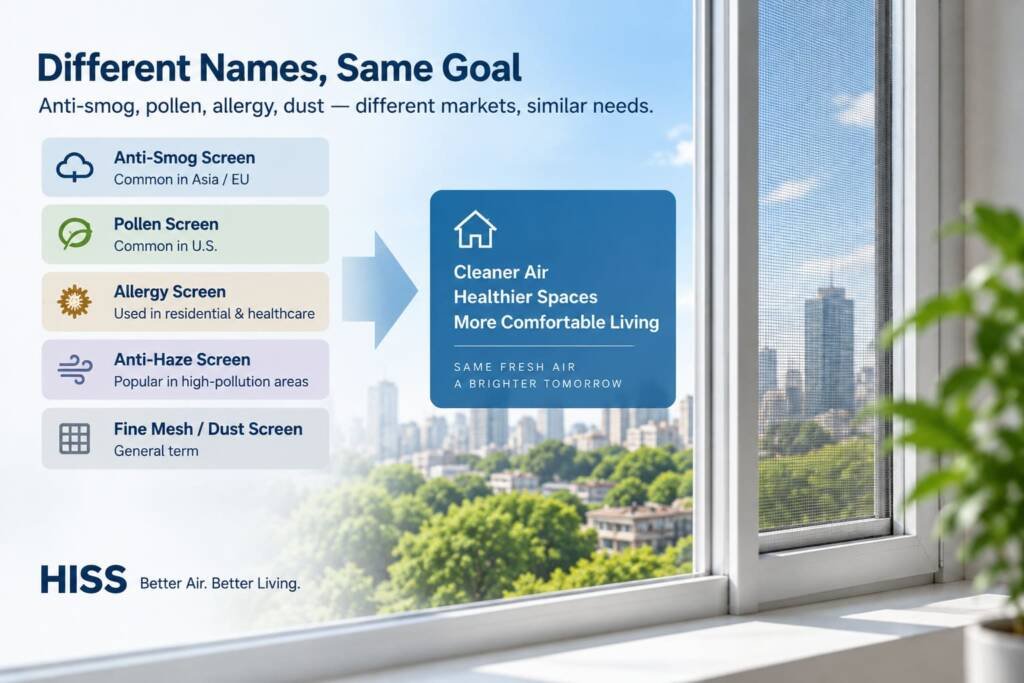
Client and export catalogs often say anti-smog or anti-haze. U.S. residential search and retail more often say pollen screen, allergy screen, dust filter mesh, or fine mesh. Same family of openings; different shelf labels.
| Term people type | Where it shows up most | What they usually want | What it is not |
|---|---|---|---|
| Anti-smog screen window/door | Asia / EU / export B2B catalogs | Window or door with denser particle-oriented mesh | A whole-house HVAC filter replacement |
| Anti-haze / anti-pollution screen | Asia brand sites; some factory EN pages | Often the mesh upgrade itself | Always third-party certified for every brand |
| Pollen screen / allergy screen | U.S. retail, Amazon, DIY kits, screen shops | Finer mesh for pollen, dust, seasonal allergens | Automatically the same weave or tech as every “anti-smog” brand |
| Window filter screen / dust screen | Mesh factories, “best of” listicles | Tighter woven or coated mesh for dust and haze language | Proof of lab performance without a named report |
| PM2.5 screen (marketing term) | Export product pages | Fine mesh sold against fine-particle language | A published, comparable rate unless the supplier provides method + report |
| Insect / bug screen | Mass retail everywhere | Insects and coarse debris | A denser anti-smog or pollen fabric by default |
Key takeaway: For U.S. dealer conversations, lead with the job (pollen, dust, smoke season). Use “anti-smog” when the buyer or export RFQ already uses that word. Spec mesh class and carrier system either way. Otherwise the quote is incomplete.
Four technology classes on the real shelf (do not mix in one RFQ)
SERP and catalog pages usually hide four different products under similar health language:
| Class | How it works (plain language) | Typical offer form | Buyer risk if you mis-buy |
|---|---|---|---|
| A. Dense woven / coated pollen–dust mesh | Tighter weave and/or specialty fiber or coating, sold for dust and pollen control; comparative capture requires test data | Mesh rolls, re-screens, factory mesh options on doors/windows | Lower airflow; needs cleaning; quality varies by weave and coating |
| B. Electrostatic anti-haze mesh | Charge-assisted capture marketed for fine particles | Brand window-screen systems (common in Asia marketing) | Ask how performance is proven outdoors over time; do not assume “electrostatic” equals permanent lab-grade results |
| C. Nanofiber membrane screen | Multi-layer membrane (often mesh + nanofiber + mesh) sold for smog/pollen/emissions language | Adjustable kits for sash windows; specialty retail | Different product family than a door hardware system; size range and mounting limits apply |
| D. “Anti-smog / allergy window” (glazing system) | Full window product story (seals, glass, sometimes filtration claims), not a mesh upgrade | Window manufacturers’ blogs and product lines | Wrong RFQ if you only needed screen mesh on an operable opening |
HISS’s relevant path is Class A on a functional carrier: ask which denser mesh option is available for a specified ventilation door or screen door model, and request its construction and performance documents. That is a different sales and service model from “order a roll on Amazon and re-spline the frame.”
Key takeaway: Before you compare prices, name the class. Dense mesh on a door, electrostatic fabric, nanofiber membrane kit, and an “anti-smog window” unit are not interchangeable line items.
How denser anti-smog / pollen mesh differs from insect mesh

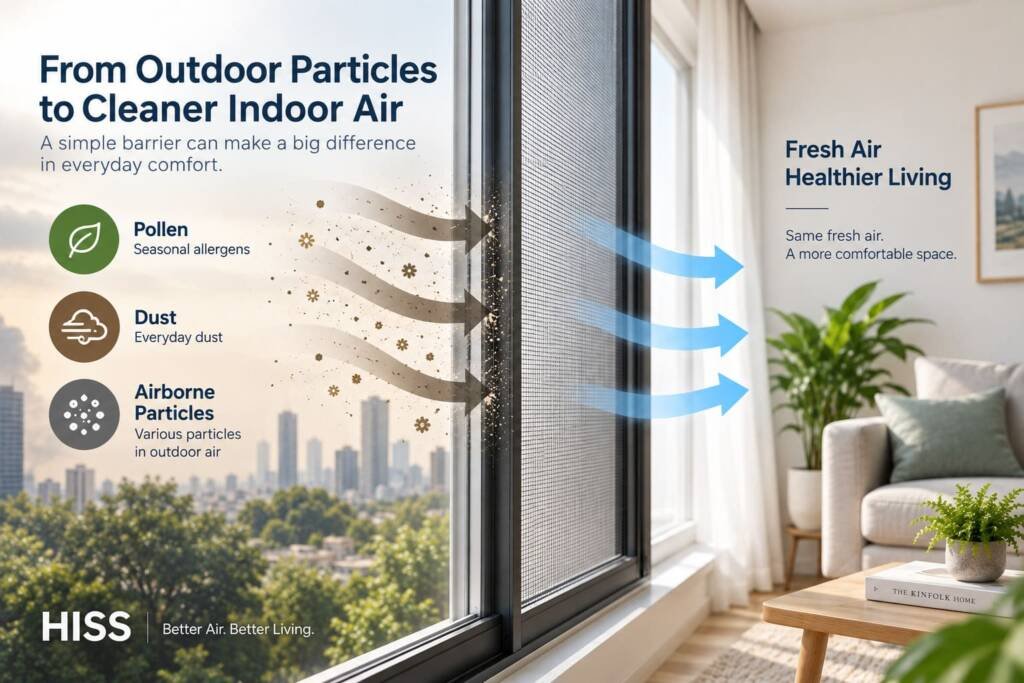
A conventional insect screen is designed for insects and airflow. Mesh sold for pollen or dust control may use a denser weave, specialty yarn, or coating. Its effect on specific particle sizes cannot be assumed from the product label alone.
Three practical consequences:
- Airflow trade-off: denser mesh can reduce free airflow compared with standard insect mesh. Request airflow data for the proposed mesh and opening where ventilation matters.
- Visibility and cleaning: fine mesh shows dust sooner. Confirm a practical cleaning and replacement method before ordering.
- Frame and edge seal: gaps bypass the mesh. Check magnetic seams, frame fit, and open side vents before relying on a mesh test result.
Integrity note: Many competing pages quote PM2.5 or “block rate” percentages. Those numbers only mean something with a named test method, sample condition, and third-party report (some brands publish independent lab charts; many do not). Until a supplier hands you that package, treat percentages as marketing, not specification. This article does not claim a filtration percentage for HISS mesh or for an installed HISS opening.
Choose by job and evidence
| Buyer concern | Starting point | Check before ordering |
|---|---|---|
| Insects only | Standard insect mesh | Fit, airflow, and service access |
| Pollen or everyday dust | Mesh option on a suitable window or door system | Mesh construction, fit, airflow, cleaning, and any comparative test report |
| PM2.5 performance target | Only a system with relevant documentation | Named test method, sample condition, measured result, and whether the installed frame was tested |
| Severe wildfire or industrial smoke | Close openings and use appropriate indoor filtration | Do not treat a screen as a safety measure without application-specific evidence |
| Damaged frame or seals | Repair the opening first | Edge gaps can bypass even a tested mesh |
A fine-mesh screen may help with a documented particle concern, but no generic “anti-smog” label proves a reduction in pollen, PM2.5, or smoke at the installed opening. Keep claims tied to the exact mesh, method, and test conditions.
Four form factors (carrier systems)

| Form factor | How it shows up | Best when | Watch for |
|---|---|---|---|
| Fixed / removable window screen | Mesh in a frame; DIY kits and re-screens dominate U.S. pollen SERP | Simple residential windows, low cycle count | Poor edge fit, hard cleaning, no door function |
| Retractable roller screen | Mesh rolls into a cassette; side guides | Openings that must clear completely; doors and large leaves | Guide gaps, wind on large fields, mesh grade must match hardware |
| Pleated / folding screen door | Mesh stacks into pleats when open | Doorways, barrier-free needs, frequent open/close | Stack depth, fold-line durability, service path |
| Ventilation door with mesh option | Door stays in place; panels open for airflow; denser mesh can be specified | Ventilation + insect/particle control without leaving the door fully open | Buying mesh first and door geometry second |
Most “pollen screen” content stops at fixed windows and mesh rolls. That leaves a real gap for projects that need a door that still ventilates or a full-open screen field with serviceable hardware. For HISS, the practical anti-smog conversation often lands on the Ventilation Door Series with a denser anti-haze mesh option, plus other screen door systems when the opening is primarily a full-open screen problem.
Carrier choice is its own decision. A retractable roller screen on a sliding-glass leaf, a pleated (folding) screen carrier, and wide-opening retractable screens for garage bays each spec differently, even with the same mesh.
System details that matter more than the marketing label
Before the mesh debate, pin down the opening itself. Screen door sizes and types covers how carrier and measurement interact.
1) Mesh is only half the opening
Ask for mesh construction (fiber type, weave density class, coating if any, color) and how it is retained. Then ask how the frame seals at head, sill, and meeting stiles. Premium mesh in a gappy door is a premium leak.
2) Ventilation path vs full open
Some buyers want the leaf fully open with a screen field. Others want a closed door that still ventilates through controlled openings. Ventilation door designs exist for the second case. Name which behavior you want in the RFQ first sentence.
3) Durability and cycle life
If the product is a door opened daily, mesh upgrade alone is not enough. Look for hardware and cycle testing on the door or screen system. HISS ventilation and screen lines commonly reference high open-close cycle testing on defined sample sizes (for example 100,000-cycle pull life on specified test openings). Ask for the model-specific report, not a generic “tested” badge.
4) Cleaning and service
Fine mesh and membrane products load faster. Prefer systems where mesh can be removed, washed, or swapped without destroying the frame. If every clogged panel needs a factory visit, field performance will not last.
5) Claims language
Write two lists: language allowed in sales sheets with documentation, and language forbidden until reports exist. That single discipline prevents most anti-smog RFQ fights later.
Key takeaway: Specify the whole opening, not just the fabric. “Anti-smog screen” as a three-word line item invites the cheapest cloth that still uses the word.
RFQ checklist for anti-smog / pollen screen windows and doors
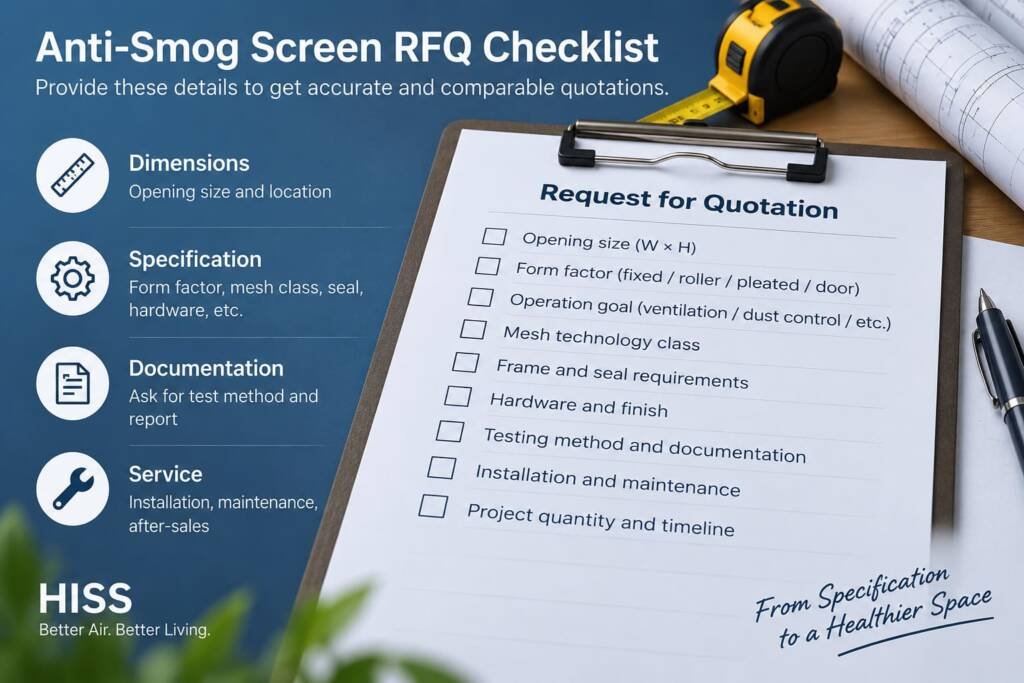
| Field | What to write |
|---|---|
| Opening ID | W-12 living room, D-03 patio, etc. |
| Opening type | Window / entry door / patio / balcony / ventilation door |
| Clear width × height | Three-point measures preferred; inches or mm stated once and used consistently |
| Operation goal | Full open + screen / closed door with ventilation / fixed screen only |
| Market language on the bid | Anti-smog / anti-haze / pollen / allergy / dust filter: pick the buyer’s words |
| Technology class target | Dense woven mesh / electrostatic / nanofiber membrane / glazing system (usually not mesh) |
| Mesh class target | Standard insect vs denser particle mesh; color if known |
| Documentation request | Construction sheet; any third-party report the factory will stand behind (method named) |
| Seal and hardware notes | Magnetic meet, bottom condition, wind exposure, pet or impact needs |
| Service model | Field-replace mesh? Dealer stock? Factory parts path? |
| Quantity and program | One opening vs multi-unit schedule (do not invent MOQ) |
| Claims language for sales | What may appear in brochures vs what stays off the page until reports exist |
Use one unit system on the whole schedule. Mixed inch/mm RFQs create the wrong fabric size faster than any mesh debate will.
Where HISS fits
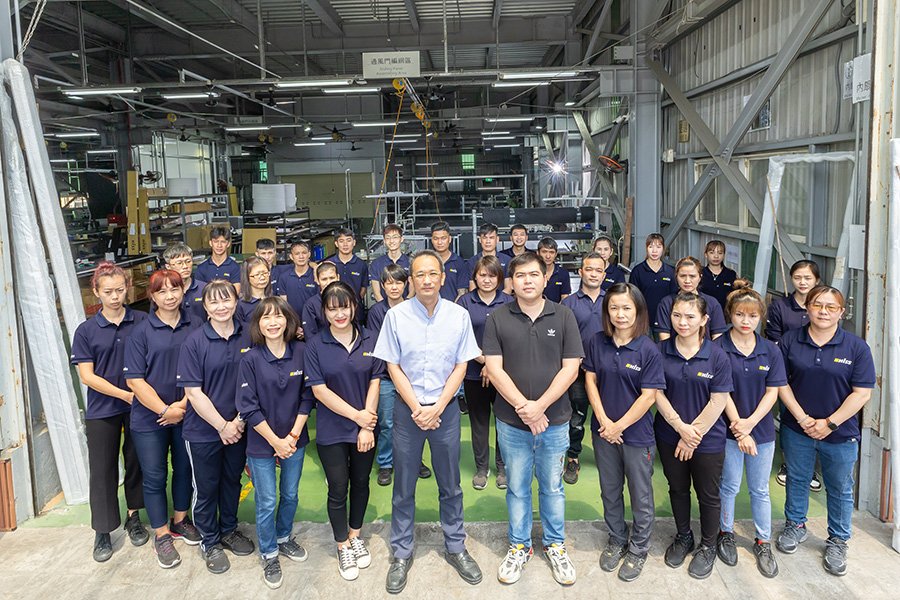
HISS (Ching Chan Technology, Kaohsiung, founded 1987) designs functional door and window systems (ventilation doors, pleated screens, retractable roller screens, and related lines) rather than selling mesh as a standalone filter gimmick. For an anti-smog or pollen-related inquiry, confirm this product path and its documentation with HISS:
- Carrier system first: door or screen architecture that matches the opening and daily operation
- Mesh option second: ask which denser mesh is available for the selected model and what its documentation supports
- Tested hardware where it applies: cycle life and structural claims stay tied to specific models and test openings
- Export / dealer conversation: drawings, opening schedules, and mesh documentation before brochure promises, including translation between “anti-smog” and U.S. pollen/allergy language when needed
Start with the English Ventilation Door Series if the project needs controlled airflow with a door still in place, browse the full product store for related screen systems, or send an opening schedule through Contact us. Still vetting a supplier for the RFQ? See how to vet a screen door manufacturer. Company background: About HISS.
Need a factory-side review of a denser mesh option on a real opening schedule? Include clear sizes, operation type, market language on the bid (anti-smog vs pollen), and whether you need a ventilation door, retractable screen, or pleated door as the carrier. We will answer with system options, not invented filter percentages.
FAQ
Is an anti-smog screen the same as a U.S. pollen or allergy screen?
Is an anti-smog screen the same as a HEPA air purifier?
Will anti-smog mesh stop all PM2.5?
Does denser mesh mean less airflow?
Nanofiber vs dense mesh vs electrostatic: which should I specify?
Can I just re-cover my existing screen frames?
How often should anti-smog or pollen mesh be cleaned?
Bottom line
Summary: An anti-smog screen is one possible mesh-and-opening specification for projects that need ventilation and want to evaluate particle-control options. In the U.S. the same job often wears pollen or allergy labels; in export catalogs it says anti-smog or anti-haze. Specify the technology class, mesh, seals, cleaning plan, and evidence for each proposed claim together.
Next step: If you are building a dealer program or a multi-opening schedule, start with form factor and measures, then lock mesh class and documentation. To map options to a real set of openings, send the schedule through HISS English contact and reference the ventilation door series when controlled airflow is part of the brief.
Specify the mesh and the opening together
An anti-smog screen is a mesh-and-opening spec—not a filtration promise.
Technology class, mesh construction, edge seals, airflow, cleaning, and evidence for any performance claim all belong on the same RFQ. A generic label proves nothing at the installed opening.
Have a dealer, contractor, OEM, or multi-opening program? Send the opening schedule and the market language on the bid. HISS can review the carrier system, the available mesh option, and the documentation required before quotation.
Request a configuration review
Share the opening and operating conditions. We’ll help narrow the system before quotation.