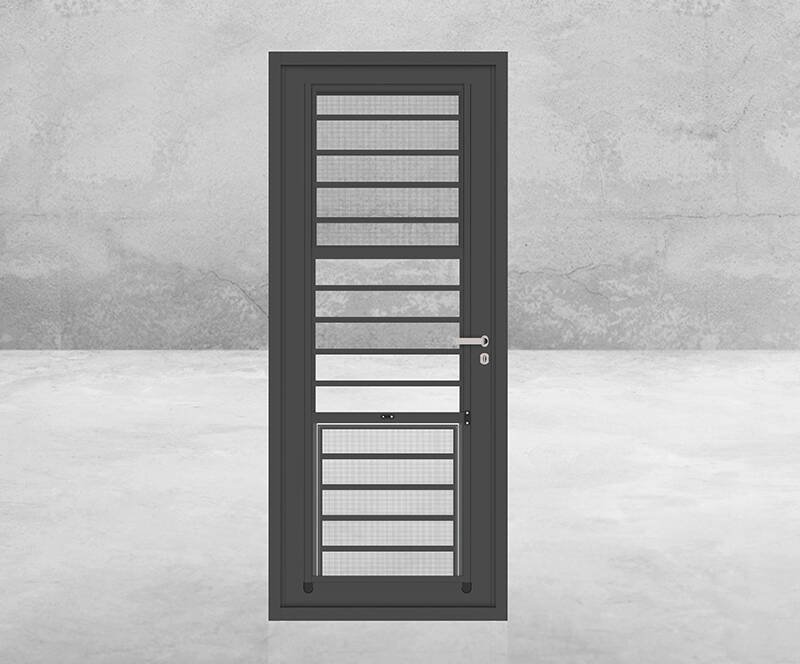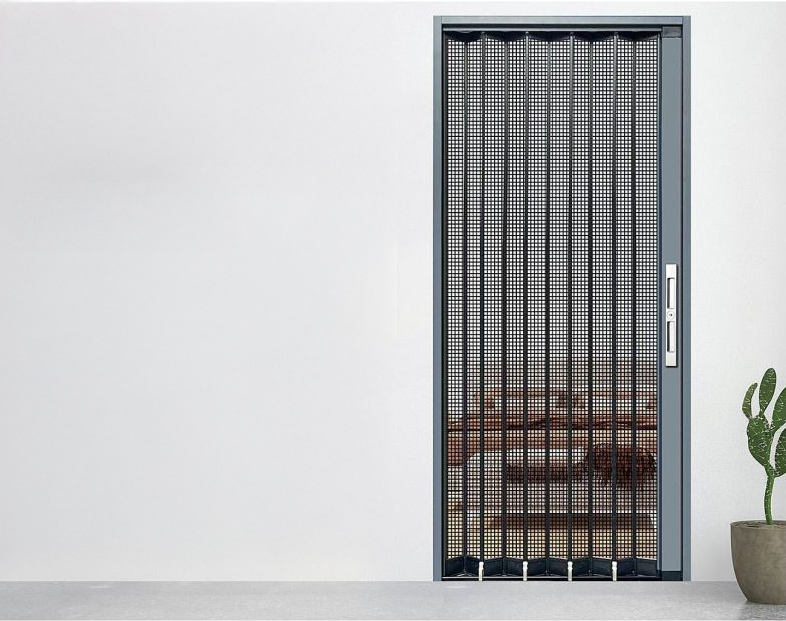

A garage-bay screen covers the vehicle opening for air and insects, then retracts so vehicles can move. It does not replace the overhead door. Name the class first, then measure the free span.
- Choose the class: magnetic kit, track-guided retractable, or motorized.
- Measure the span: single-car (often about 8–9 ft) and double-car (often about 16 ft) openings are different system classes.
Search “retractable screen door garage” and you get three jobs mixed together: a cheap magnetic mesh hung in the bay, a spring-loaded retractable with side tracks, and a motorized roll-up sized for one- or two-car openings. Different budgets, different failure modes. Spec them as one SKU and a two-car bay gets an underbuilt mesh that balloons in the first storm.
Definition: what a retractable screen for a garage opening is
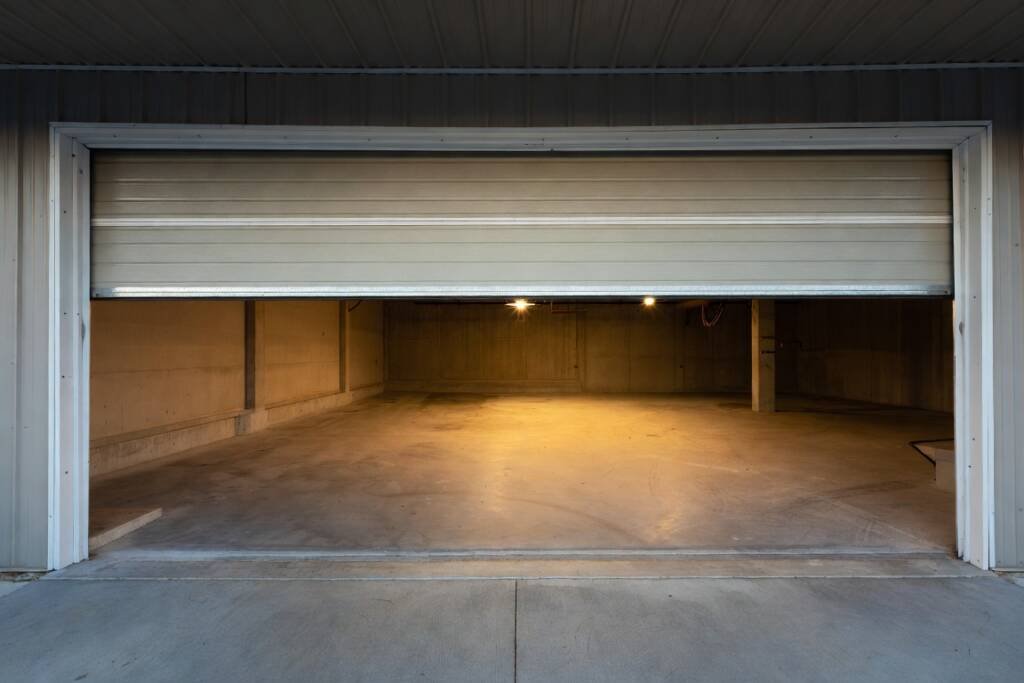
Definition: A retractable screen for a garage opening is a mesh system fitted to the vehicle bay. It covers the opening for ventilation and insects, then retracts to clear the bay. It works with the existing overhead door. It is not a replacement garage-door panel, and it is not the same product as a magnetic hang-in kit.
“Garage screen” names the opening. Magnetic, retractable, and motorized name the mechanism. Span and wind limits follow the mechanism.
Is a magnetic garage screen the same as a retractable garage screen?
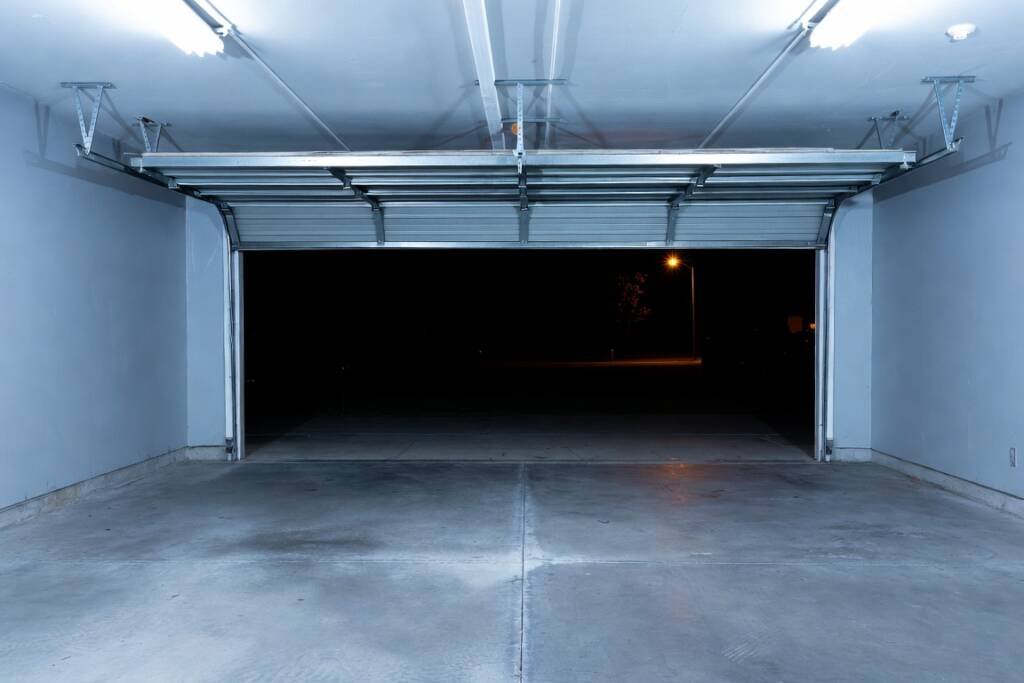
No. Do not put them on the same RFQ.
| Class | How it works | Best for | Common failure |
|---|---|---|---|
| Magnetic / soft kit | Mesh hangs in the opening; magnets or zippers make a walk-through seam | Light duty, low wind, temporary | Billowing, seam gaps, short life, poor seal on out-of-square frames |
| Manual track-guided retractable | Mesh in side guides; springs or tension return it to a cassette or housing | Regular use, cleaner edges than a soft kit | Wrong span class, dirty guides, underbuilt hardware on wide bays |
| Motorized / power retractable | Motor drives the roll; remote or switch | Tall or wide openings, high cycle, accessibility, project work | Cheap motors, no service path, install that fights the overhead-door hardware |
U.S. retail jumps from a sub-$100 magnetic curtain to a multi-thousand-dollar motorized install. That ladder is a price map, not a spec. A mid-tier manual on a calm single bay will outperform an oversized promise on a double bay facing open weather.
Why a garage bay gets a screen
Overhead door open, air and light in, without turning the bay into a wind tunnel for bugs, leaves, and heat. Workshop time, gym or studio conversions, garage-to-driveway events. Pet containment is mesh grade, latch, and the animal, not a default of every kit.
None of that automatically justifies the most expensive motorized system. None of it makes a forty-dollar curtain a multi-year answer on a windy double bay.
Can one retractable screen cover a two-car garage?
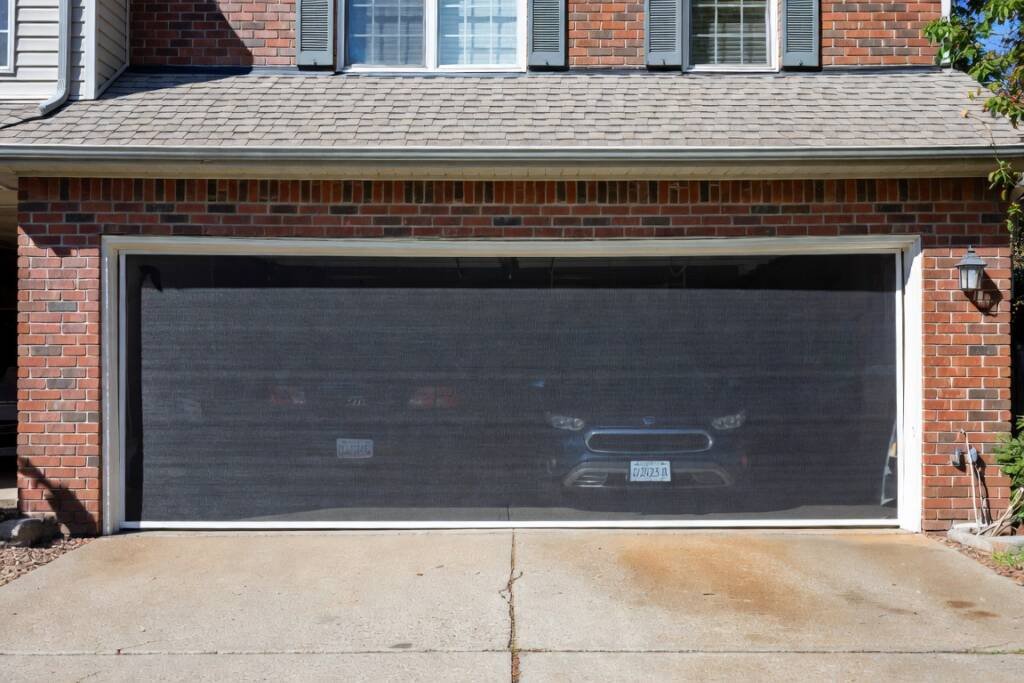
Only if the system is built for that free span: multi-unit, double-pull, or motorized wide-opening. Do not stretch a single residential cassette that fits a sliding-door leaf across a double bay.
A sliding-door retractable often covers one operable leaf. A garage free span can be the full vehicle opening. Cross-type size logic: screen door sizes and types.
| Opening (typical residential) | Rough clear width | What it means |
|---|---|---|
| Single-car | Often around 8–9 ft wide, about 7 ft high (measure yours) | Some single-pull retractable systems can enter if envelope, wind class, and overhead-door clearance match |
| Double-car | Often around 16 ft wide class (measure yours) | Multi-panel, multi-unit, double-pull, or motorized wide-opening, not a stretched single kit |
| Oversized / RV / commercial | Project-specific | Engineered opening: drawings, wind notes, service plan |
Published HISS barrier-free roller guidance lists single-pull openings up to roughly 2.5 m × 3 m (about 98 × 118 in) on that line. That is a single-pull envelope: close to many single-car stories, well short of 16 ft. Confirm current maximums, multi-pull options, and model class with the factory for the opening you actually have.
If the free span leaves the model’s comfort zone, change the system.
Wind, mounting, and overhead-door conflicts
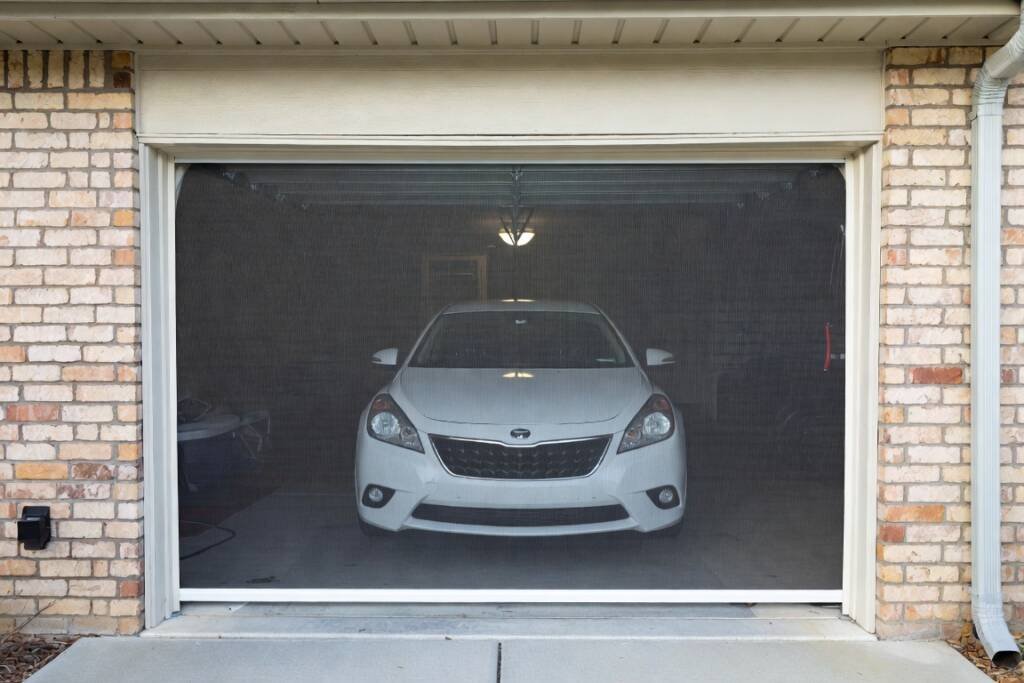
Garage bays take more lateral wind and grit than a sheltered slider. The screen also has to miss the overhead door, tracks, springs, and opener in every door position.
- Exposure: open driveway, hillside, coastal, urban canyon. Soft kits fail here first.
- Mounting plane: interior jamb, exterior face, or a built-out frame. Guides and housing need continuous, solid attach points.
- Overhead-door clearance: tracks, torsion springs, opener, slab all move. Collision in any position is a service ticket.
- Bottom: slab slope, drains, threshold steps change guide design and bug seal.
- Walk-through: some specialist garage brands build a pedestrian door into the mesh. A classic roller cassette usually does not. Name that early.
- Security: insect screen is not a security shutter. Forced-entry resistance is a different product family.
Anti-lift / large-opening hardware exists because wide, tall mesh lifts out of the guides under wind. That class of thinking matters more than “heavy duty” on a brochure.
How do you measure a garage opening for a retractable screen?
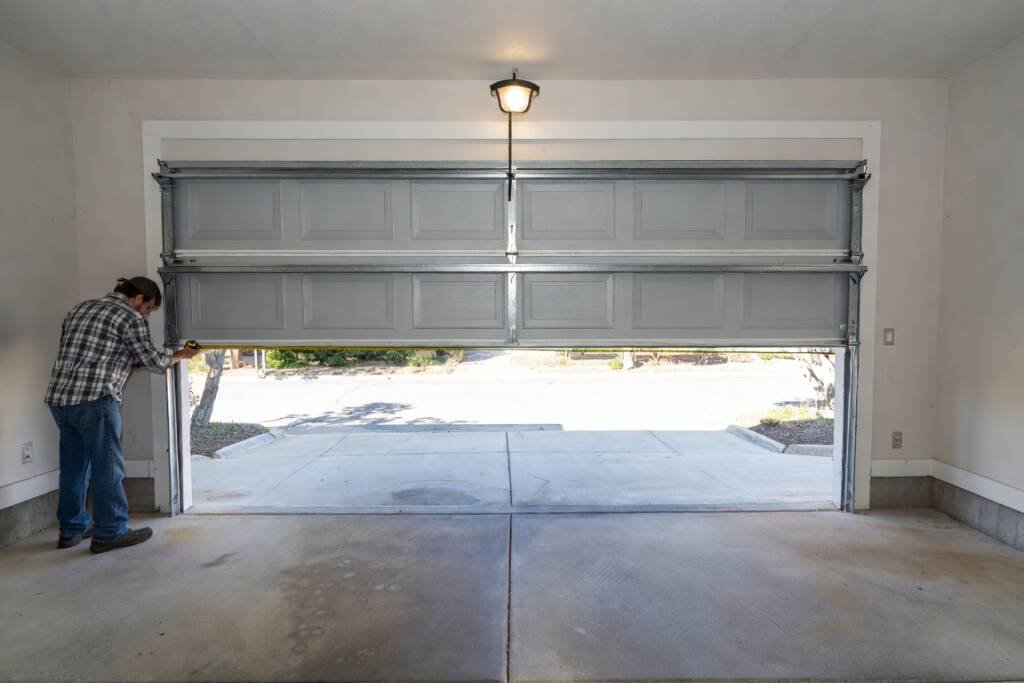
Measure the free span you will actually screen, not the door sticker. Three widths (top, middle, bottom) and three heights (left, center, right) on the planned install plane. Rigid tape. One unit system. Photograph both jambs, head, slab, overhead-door track, and opener rail before the RFQ goes out.
1) Name the span
- Full vehicle opening, or a pedestrian opening beside the bay?
- Overhead door stays open behind the screen, or the screen has to clear a parked position?
2) Width: three points
- Clear width at the top of the planned screen plane.
- Middle.
- Bottom.
- Record all three. Tight-fit: use the smallest unless the factory instruction says otherwise.
3) Height: three points
- Left, center, right on the same plane.
- To the finished head the housing will use, and the finished floor the guide or seal will use.
- Check overhead-door clearance at full open. Consumer kits sometimes publish a minimum clear height under the open door. That is product-specific, not physics.
4) Checks that change the PO
- Jamb depth and material (wood, steel, masonry, vinyl wrap)
- Out-of-square openings, bowed slabs
- Power if motorized
- Wind notes for the dealer or factory
- Pedestrian passage in the mesh field, yes or no
Three-by-three on the install plane beats one center shot of the sticker size.
Measure method: three widths, three heights, then convert units for the factory package. For a garage RFQ, photograph tracks and the opener rail. Broader size logic: screen door sizes and types.
Which path fits the job?
Match class to span and exposure first. Color and remotes after the opening is real.
| If the job is… | Start here | Watch |
|---|---|---|
| Calm single bay, light seasonal use, tight budget | Magnetic / soft kit or entry-level retractable | Wind, pets, high daily cycle |
| Single bay, regular use, cleaner edges | Manual track-guided retractable sized to the measured free span | Door-track collision, under-spec guides |
| Wide double bay, frequent open-air use, accessibility | Motorized or multi-unit / wide-opening design | Two underbuilt singles sold as a system |
| Wind, tall glass-adjacent garage, multi-home program | Factory or specialist dealer path with written span and wind assumptions | “Heavy duty” with no model envelope |
| Walk-through while vehicles stay outside | A system that actually has a passage feature, or a separate man-door | Assuming every cassette includes a built-in passage door |
A retail kit is enough when
- True single-bay after three-point measure
- Mounting plane solid and reasonably square
- Modest wind
- Local installer can service that brand
Go factory when
- Double-car or oversized free spans
- Non-standard jambs, masonry, renovation out-of-square
- Motorized control, multi-opening programs, dealer standardization
- Documented wind or anti-lift expectations
- OEM / private label: a size matrix, not one house
Custom means the opening is real and the system is specified: clear W/H, unit, operation, mounting plane, wind notes, mesh, service access. Comparing factories: how to choose a retractable screen manufacturer.
RFQ checklist
Bay type, three-point W/H, overhead-door clearance, wind, operation, passage need. Copy this before you email the factory:
| Field | What to write |
|---|---|
| Opening ID | G1 Main garage, etc. |
| Bay type | Single / double / oversized; vehicle door type |
| Class target | Magnetic kit / manual retractable / motorized / factory custom |
| W top / mid / bot | Three widths on the install plane |
| H left / ctr / right | Three heights on the same plane |
| Unit | in or mm |
| Mounting plane | Interior / exterior / built-out; jamb material |
| Overhead door | Track positions, opener rail, full-open clearance |
| Wind / exposure | Sheltered / open / coastal / hillside |
| Operation | Manual / motorized; power available? |
| Passage | Full field only / walk-through required |
| Mesh | Insect, shade, pet-related (confirm grades) |
| Photos | Elevation + head + both jambs + slab + door open and closed |
What fails on garage bays
Grit in the guides, wind ballooning on the wrong span class, collision with torsion springs or opener rails, magnet/zipper fatigue, motors with nothing field-replaceable.
- Guides: driveways feed sand. Dry clean. Do not flood oil into aluminum.
- Wind: if the mesh leaves the guide in normal weather, the class is wrong for the span.
- Hardware: housings that fight springs or opener rails come back as tickets.
- Soft-kit seams: magnets and zippers that look fine in a showroom fail under vehicle and pet traffic.
- Motors: ask what is field-replaceable before the remote becomes the whole product.
Where HISS fits

Against real bay sizes:
- Single-car (often ~8–9 ft): the published barrier-free roller single-pull envelope of about 2.5 m × 3 m (about 98 × 118 in) can enter the conversation if wind class and overhead-door clearance match. Confirm the model.
- Double-car (often ~16 ft): different class. One HISS single-pull residential cassette is not a double-bay solution. Ask about multi-unit, double-pull, or wide-opening / anti-lift hardware. If the factory says no for that opening, the answer is no.
- Walk-through in the mesh: specialist garage brands often sell a center passage door. A classic HISS roller cassette screens the full field and retracts as a unit. If walk-through-while-screened is required, write it on the RFQ.
- Overhead-door collision: photos of tracks, torsion springs, opener rail, door at full open. That clearance is the garage-specific factory question.
English product pages:
- Dockable Roller Series (wide-opening / anti-lift class lives here; no clean English slug for the large-wide SKU at time of writing)
- Dock-able Roller Screen
- Motorized Roller Screen
Some roller models publish 100,000-cycle open-close tests with sample size on the product page. Ask for the condition that matches the opening.

Send the schedule through the English contact page: bay type, three-point W/H, unit, mounting plane, wind, manual vs motorized, overhead-door photos, passage need, one opening or a program. Still choosing a factory: how to vet a screen door manufacturer.
FAQ
What is a retractable screen for a garage opening?
Is a magnetic garage screen the same as a retractable garage screen?
Can one retractable screen cover a two-car garage?
What size screen does a single-car vs double-car garage need?
How do I measure for a retractable garage screen?
Do I need a motorized garage screen?
Will a garage screen keep pets in or pests out in strong wind?
Does a roller cassette garage screen include a pedestrian walk-through door?
Bottom line
Summary: Name the class, measure three-by-three on the real plane, respect overhead-door clearance, then choose kit, dealer package, or factory. Single bays and calm exposure can stay retail. Double bays, motorization, multi-opening programs, and written wind needs usually leave the soft-kit aisle.
Next step: Measure the bay, fill the checklist, and send it through HISS English contact.
Measure the bay before you choose the system
A garage opening is a span, wind, and clearance problem—not just a mesh size.
Single-car and double-car bays sit in different system classes. Record three widths, three heights, the mounting plane, wind exposure, and every overhead-door conflict before a product is selected.
Have a dealer, contractor, OEM, or multi-opening program? Send the opening schedule and photos. HISS can review the system class, span configuration, mounting conflicts, and information still required before quotation.
Request a configuration review
Share the opening and operating conditions. We’ll help narrow the system before quotation.